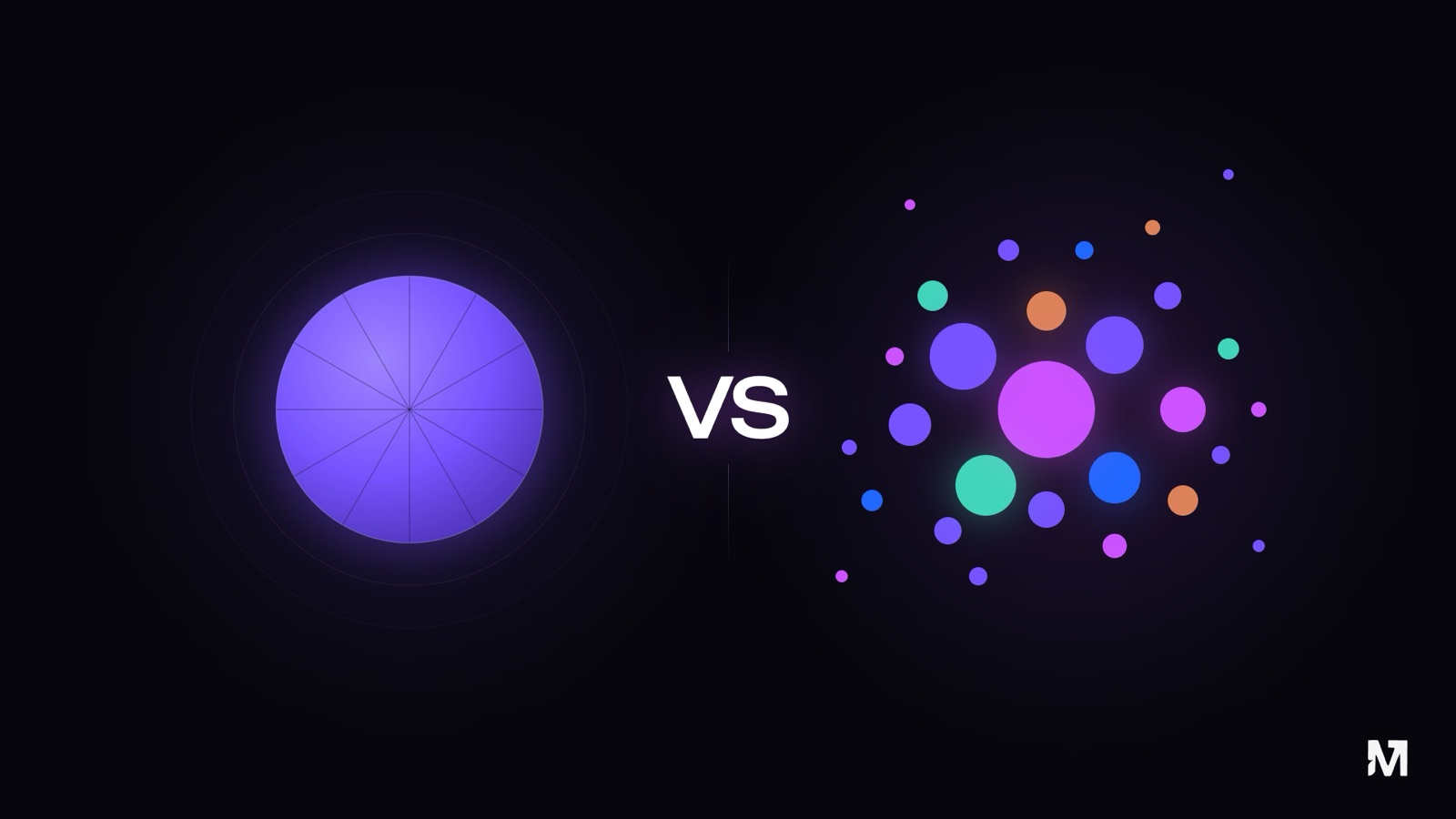
Direct donations vs Merkl rewards: two ways to incentivize a vault, one real difference
To attract deposits into a vault, curators and issuers often add rewards on top of the vault's native yield. There are two ways to distribute those rewards to a vault's depositors, and which one to use is a frequent point of debate.
On one side, the donation trick: sending the underlying asset straight into the vault, which raises its share price so every depositor's position is worth more. On the other, distributing rewards through Merkl, which computes who earned what and pays each eligible wallet directly.
What a donation actually is
A donation means sending funds directly into an ERC4626 vault. Because the transfer raises the vault's total assets without minting new shares, every depositor's share value rises. No claim, no interface, no campaign. The extra return simply shows up as a higher share price, with nothing for the user to claim.
Think of the vault as a shared pot, where each share is worth total in the pot ÷ number of shares. If the pot holds 100 across 100 shares, one share is worth 1, so your 10 shares are worth 10. Donate 20 into the pot without creating new shares, and the pot holds 120 across the same 100 shares: each share is now worth 1.20 and your 10 are worth 12, a gain with nothing to do.
Where a donation falls short
A donation comes with several real disadvantages.
You reward everyone, with no way to choose
This is the difference that matters most, and it is the one a donation can never close.
A donation lifts the share price for every wallet in the vault, indiscriminately. You cannot segment. You cannot say "reward only the users who arrived through a specific app or interface." You cannot customize the payout per audience. The vault does not know where a depositor came from, so neither does the donation.
Segmentation is not a niche feature. It is how a wallet rewards its own users, how an app rewards only the deposits that came through it, and how an issuer runs a campaign for one partner without paying the whole market. A donation collapses all of that into a single undifferentiated payout.
Related: a donation only rewards holders going forward. There is no retroactive distribution.
You must pay in the vault's asset
A donation has to be paid in the vault's own asset. That is fine if you are a stablecoin issuer sitting on that currency. It is a problem if you are a chain or a protocol that wants to incentivize in your own token, because a donation only accepts the vault's asset. You would have to sell your token for that asset first, creating sell pressure instead of putting your token in users' hands.
You get one lever, and it can work against you
A donation gives you one lever: the vault's total APR. On Morpho, you set the total rate you want the vault to show, and the donation tops it up to reach that number. That is your only control.
But many issuers do not want to pin a final rate. They want a fixed spread on top of whatever the vault already earns on its own, and a donation cannot guarantee that. You control the final rate, not how much of it you are actually paying for, so as a stablecoin issuer you have no real guarantee you are earning more than you pay out. If the vault's own yield drops, your top-up quietly grows, and you can end up overpaying.
For example, say the vault earns 3% natively and you top it up to a 5% display rate. If the native yield later falls to 1% and you still want to show 5%, you are now funding 4% yourself while the vault earns 1%.
Because it is a single total APR for everyone in the vault, it also acts as a ceiling. If the vault's own markets start earning more than the rate you set, depositors do not keep the extra, they stay stuck at your number. And you have to keep adjusting that number by hand as native yield moves.
And smoothing a donation into a total APR is only possible on Morpho, where it arrives as small increases every block so the rate never rises too fast. On any other vault, it is not one donation but many small ones over time, and the operational burden of running that is significant.
You concentrate your budget on a single curator
Donating to one vault sends all your budget into growing the TVL of a single curator. Others, potentially more effective, are shut out. As an issuer, your go-to-market should stay global and favor healthy competition between curators, not quietly pick a winner for them.
It is less capital efficient for the issuer
A donation pays out everything, automatically, to everyone. That sounds efficient. It is the opposite.
In a claim-based setup, a share of users never claim. That unclaimed budget can come back to you, which lowers your real cost of capital. Many teams end up distributing meaningfully less than they budgeted. With a donation, there is no breakage. Every unit is paid out whether the recipient wanted it or not, including to dormant wallets that would never have claimed.
The subsidy can be invisible
A donation pushes up the APY shown on a vault, while the breakdown of yield sources can still display 0% incentives, so users might deposit expecting that APY to hold, not realizing it is being sponsored by rewards. Once the donations stop, the rate can quietly fall back down. Morpho now surfaces donations on its UI, and can release a donation gradually instead of all at once so the result reads as a steady APR rather than a one-time spike. That fixes the problem wherever the interface shows it, though not every UI does yet.
And no, it is not a legal shortcut
It is worth saying plainly, because people treat it as one. A donation is not a legal loophole. If you are not comfortable giving incentives, doing it through Merkl and doing it through a donation are exactly the same act. Before Morpho surfaced donations on its UI, a donation was simply a way to hide that liquidity was being subsidized. And even where the UI flags a donation, it still does not show how much of the yield is subsidized.
What you get with Merkl instead
Every limit above is a capability on the Merkl side. Distributing rewards through Merkl is not just another way to lift a vault, it is a different kind of tool: a programmable paying agent that works out who is owed what before anything moves.
Reward exactly who you choose
Merkl scores each wallet against rules you define, so you can gate rewards to a specific source, audience, or action. Take the Robinhood campaign on a Morpho vault, distributed through Merkl: rewards reach only the users who deposited into the vault via the Robinhood app, not every depositor. You can also reward activity that already happened, which a donation can never do.
Pay in any token
Rewards are independent of what the vault holds. A chain or protocol can incentivize in its own token, with no need to sell it first.
Set the payout rule you actually want
Merkl supports the payout methods a campaign actually needs, built in: a fixed budget, a target total APR, a fixed APR or a fixed top-up above the vault's native yield, or margin sharing where you pass back part of the net interest margin. Each can run with a cap that resolves automatically, so the rate follows the rule you set instead of a single manual dial.
On Morpho, a donation can only pin a total APR, with the overpay risk we saw above. Merkl does that too, but it also offers methods a donation cannot, like margin sharing: you distribute only a share of the yield your reserves generate, so you never pay out more than you make.
Keep curator competition open
Instead of rewarding one specific vault with donations, reward the whole market your asset is used in. Every vault that allocates into that market is exposed, so no single curator is favored and competition stays open.
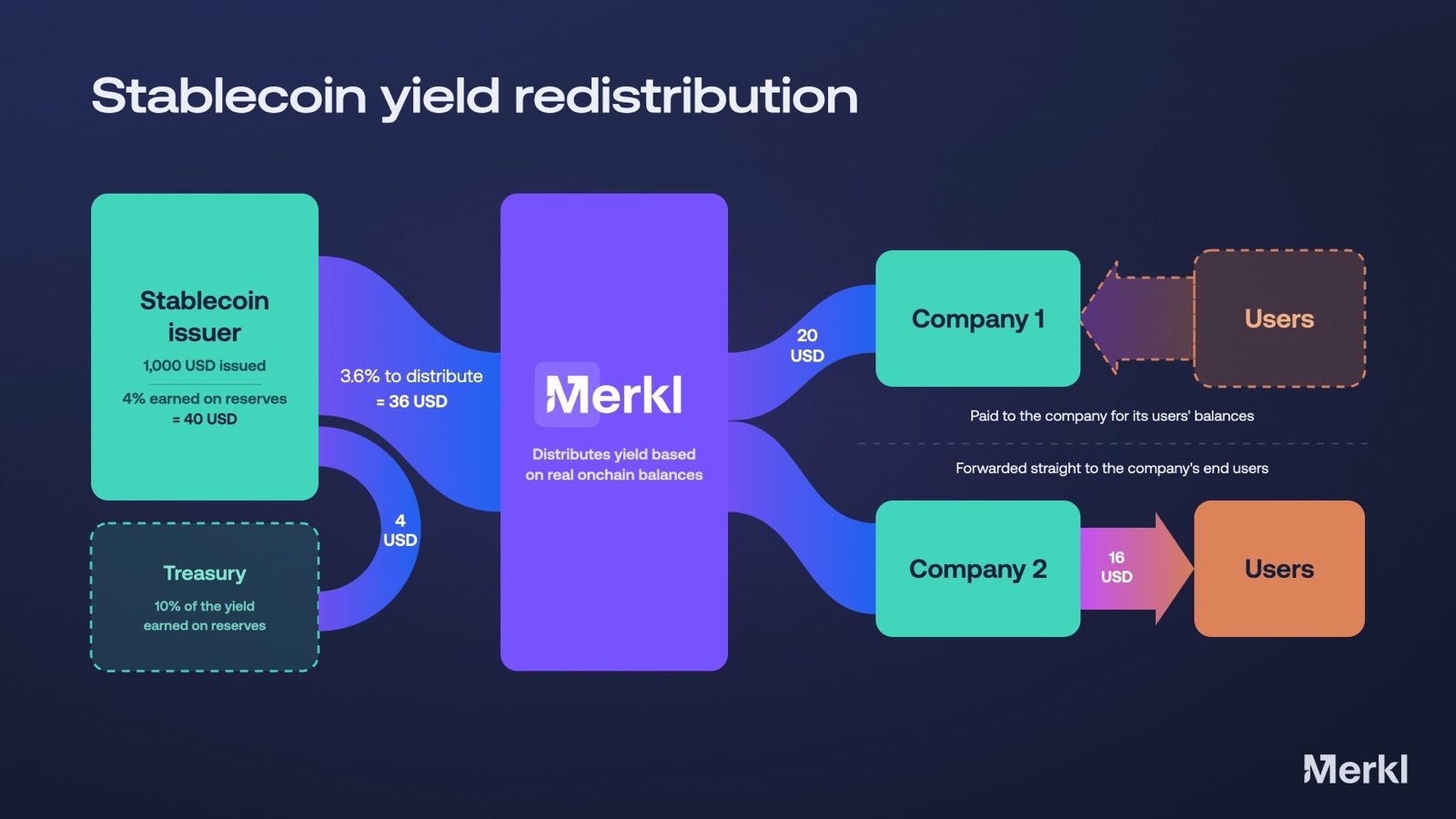
A market does not see individual users, only the vault as one big depositor, so a reward aimed at the market would land on the vault's address rather than the people inside it. Merkl's reward forwarders look through the vault and split the reward across its real depositors, pro rata.
For the user, the experience is identical to a donation: same vault position, same claim, same yield in their wallet. The difference is entirely on your side. You reward every vault in the market at once and keep competition open, instead of locking your budget into a single curator. No trade-off for depositors, a strictly better setup for you.
Recover what goes unclaimed
A donation pays every wallet automatically, so none of the budget comes back. With Merkl you decide per audience: leave wallets on the default claim model and the rewards users never claim can return to you, lowering your real cost of capital, or turn on Autoclaim for the users you want to reach hands-free. You are not locked into paying everyone.
Reward users hands-free with Autoclaim
There is one real argument for donations: the user never has to claim. Yield just accrues inside the vault, with zero friction. For onboarding non-crypto-native users, that matters.
Merkl now answers this directly with Autoclaim. Instead of the default pull model, where users claim their own rewards, Autoclaim runs claiming in the background and pushes rewards straight to user wallets on a schedule you define. The user never clicks claim. The rewards simply appear.
Autoclaim is configurable end to end: claim cadence, a minimum dollar value per user before a claim fires, scope by campaign and reward token, and audience targeting so you can push for some users and keep others on pull.
In other words, the one thing donations do well, frictionless delivery, is now a setting inside Merkl, without giving up the calculation engine underneath. Best of both worlds.
The bottom line
A donation works when you want to reward everyone in a vault, in the vault's own asset, with no distinctions. That is a narrow case.
For anything more, choosing who gets rewarded, paying in your own token, or getting unclaimed budget back, Merkl handles it from a single setup. It is the engine that works out who is owed what, and pays exactly them.